2026 Hyundai IONIQ V China
ToggleHyundai IONIQ V: Hyundai’s Bold China-Exclusive EV Strategy Explained
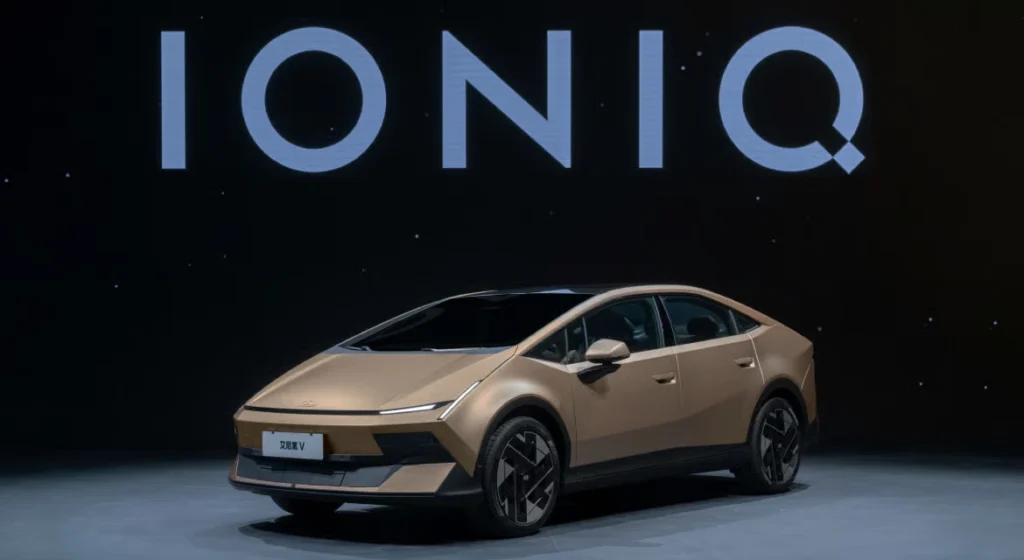
The Hyundai IONIQ V marks a significant shift as Hyundai redefines its electric strategy in China. It delivers a fresh design and new technology with a long-range target of over 600 km.
The IONIQ V isn’t just another electric car launch; it’s a powerful statement. Revealed at Auto China 2026, this fully electric sedan (or liftback-like EV) highlights Hyundai’s strong comeback in the highly competitive Chinese EV market. Created specifically for Chinese customers under the new Ioniq sub-brand, it reflects a notable change in how Hyundai designs, engineers, and markets its future electric models.
What makes this model even more crucial is that it is the first production vehicle under the China-focused Ioniq initiative. This strategy is backed by significant investments, strong localization, and a plan to release 20 new models over the next five years.
Also Read: Hyundai IONIQ 3 Revealed With 496 Km Range and Smart EV Tech
Full Specifications – (China Model)
| Category | Specification |
|---|---|
| Model Name | Hyundai IONIQ V |
| Segment | Premium Electric Sedan / Liftback |
| Platform | BAIC co-developed EV platform (E-GMP architecture family) |
| Market | China-exclusive (initially) |
| Design Language | “The Origin” EV design (Venus concept-derived) |
| Length | 4,900 mm |
| Width | 1,890 mm |
| Height | 1,470 mm |
| Wheelbase | 2,900 mm |
| Battery Supplier | CATL |
| Architecture | 800V fast-charging system |
| Powertrain Type | Pure Electric (BEV) |
| Range (Claimed) | Over 600 km (CLTC, long-range variant) |
| Charging System | Ultra-fast DC charging (800V support) |
| Infotainment Display | 27-inch ultra-thin 4K panoramic display |
| Instrument Cluster | AR-style head-up display (Cyber Eye / H-HUD) |
| Operating System | AI-based Smart Assistant (LLM-powered voice control) |
| Chipset | Qualcomm Snapdragon 8295 |
| Audio System | 8-speaker system with Dolby Atmos |
| Interior Design Theme | Nebula-inspired ambient lighting cabin |
| Legroom (Front/Rear) | 1,078 mm / 1,019 mm |
| Shoulder Room (Front/Rear) | 1,502 mm / 1,473 mm |
| Safety Features | Multi-layer body protection, ADAS suite, 9 airbags |
| Key Tech Partners | Momenta (ADAS), Baidu (AI model), ByteDance (cloud ecosystem) |
| Production Base | Beijing Hyundai JV (Hyundai + BAIC) |
| Global Strategy Role | First step in 20-model China EV offensive |
Hyundai IONIQ V Exterior Design: Concept Car Looks in Production Form
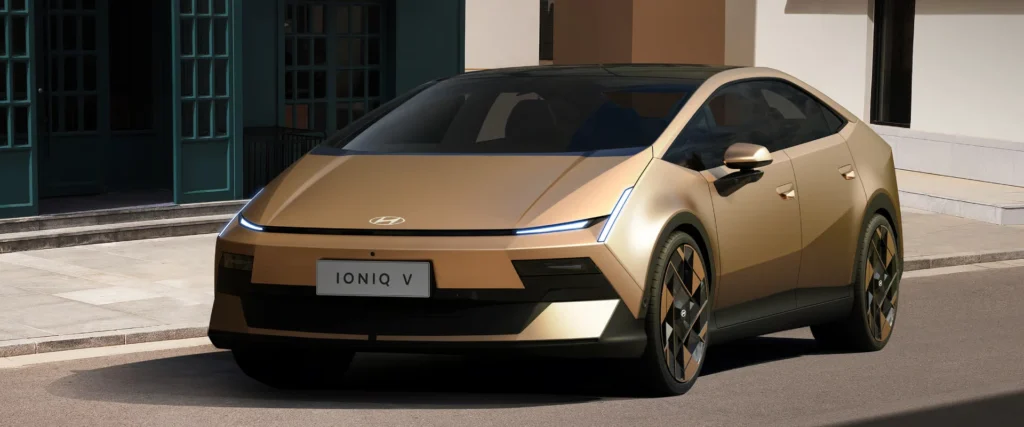
The Hyundai IONIQ V showcases the futuristic design of the Venus concept with very few compromises. Hyundai has rolled out a new design philosophy for China called “The Origin,” and this EV is its first real application.
Key exterior highlights include:
- Single-curve aerodynamic shape
- Split lighting setup with “Dimensional Light Blade” daytime running lights
- H-shaped LED signature design
- Frameless doors for a high-end coupe-like look
- Floating mirror design elements
- Black aerodynamic accents and active vent-like style
- Rear connected LED light bar featuring the “Dimensional Star Track” theme
The design goes beyond just looks; it serves a purpose. Hyundai clearly prioritizes aerodynamic efficiency to support its long-range goals.
Also Read: 2026 Hyundai Venue Knight Edition: 10 Stunning Upgrades That Make It a Must-Buy SUV
Hyundai IONIQ V Dimensions and Road Presence
Even though the Hyundai IONIQ V has a futuristic feel, it has a strong road presence with substantial sedan proportions.
| Specification | Details |
|---|---|
| Length | 4,900 mm |
| Width | 1,890 mm |
| Height | 1,470 mm |
| Wheelbase | 2,900 mm |
This long wheelbase contributes to ample interior space, making it a true executive-class electric vehicle.
Interior Experience: Digital First, Minimalist, and AI-Driven
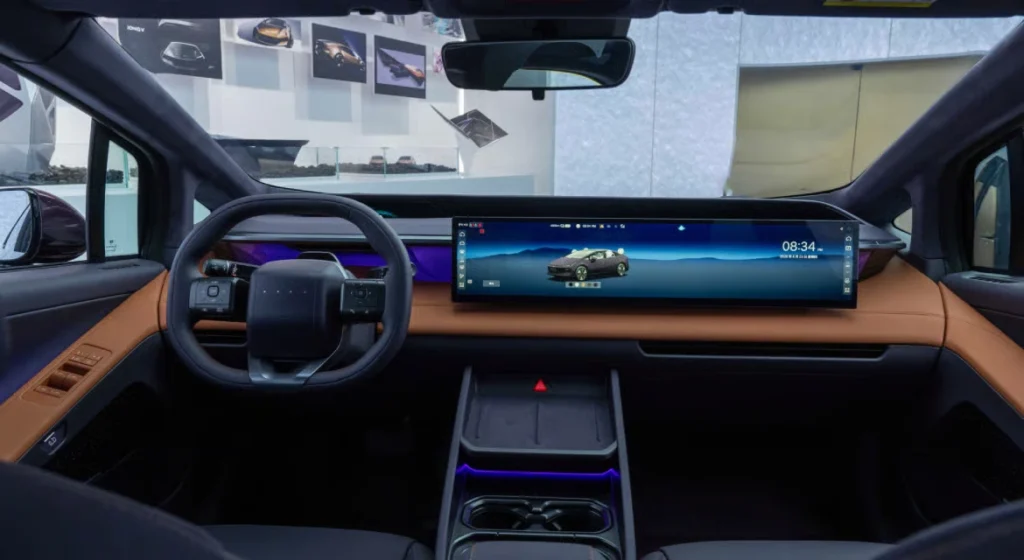
Inside the Hyundai IONIQ V, the cabin feels more like a lounge than a traditional car interior.
Interior highlights:
- Massive 27-inch ultra-thin 4K panoramic display
- “Cyber Eye” head-up display (HUD)
- Nebula-inspired ambient lighting system
- 3-spoke steering wheel with touch controls
- AI-powered voice assistant (LLM-based)
- Qualcomm Snapdragon 8295 cockpit chip
- Dolby Atmos-enabled 8-speaker sound system
The dashboard focuses almost entirely on screens, emphasizing Hyundai’s shift toward software-defined driving. Incorporating Baidu’s AI ecosystem, ByteDance’s cloud technology, and CATL battery intelligence strengthens its approach tailored to China.
Also Read: Hyundai Creta Summer Edition Launched in India with New Features Across Variants
Hyundai IONIQ V Space, Comfort, and Practicality
Hyundai has focused heavily on optimizing interior space:
- Front legroom: 1,078 mm
- Rear legroom: 1,019 mm
- Front shoulder room: 1,502 mm
- Rear shoulder room: 1,473 mm
These measurements position it among the most spacious EVs in its class in China, specifically aimed at premium buyers moving away from conventional ICE sedans.
Platform, Battery, and Performance: Built for Efficiency
The Hyundai IONIQ V uses an advanced EV architecture co-developed with BAIC. It incorporates batteries supplied by CATL, the world’s largest EV battery maker.
Technical foundation:
- 800V ultra-fast charging system
- E-GMP-based electric platform (localized version)
- CATL Battery Integration
- Dual drivetrain compatibility (standard and long-range variants expected)
Performance Insight:
Though Hyundai hasn’t disclosed motor output or acceleration figures, the focus rests clearly on efficiency and range, rather than maximum performance.
Range:
- Long-range variant: over 600 km (CLTC cycle)
In real-world figures, this is expected to translate to about 450–480 km WLTP equivalent, depending on driving conditions.
Also Read: Hyundai Boulder Concept: 5 Shocking Things About This Rugged SUV
Hyundai IONIQ V Feature Highlights Table
| Category | Features |
|---|---|
| Infotainment | 27-inch 4K panoramic display |
| Connectivity | AI voice assistant (LLM-based) |
| Audio System | 8-speaker Dolby Atmos setup |
| Charging | 800V fast charging architecture |
| Safety | Multi-layer structure, ADAS suite (details not fully revealed) |
| Interior | Ambient nebula lighting system |
| Platform | BAIC co-developed EV architecture |
China Strategy Behind Hyundai IONIQ V
The Hyundai IONIQ V is part of a broader shift in strategy.
Hyundai’s China roadmap:
- Investment: 8 billion yuan joint venture with BAIC
- New models planned: 20 EVs in 5 years
- Sales target: 500,000 units annually by 2030
- Product mix: BEVs and EREVs (Extended Range EVs)
Hyundai aims to regain its foothold in China’s EV market, where local brands like BYD and NIO dominate.
Also Read: Hyundai March 2026 Sales Surge: 7 Reasons Behind the Massive Growth
India Market Context: Will Hyundai IONIQ V Matter?
Although the IONIQ V is currently exclusive to China, its design and technology will likely impact future global EVs, including those in India.
If launched in India, it would target the segment above:
However, its market positioning would depend on pricing and customization. Considering its advanced technology and 800V architecture, it would likely compete in the ₹45–70 lakh EV segment.
Expert Analysis: Why Hyundai IONIQ V Stands Out
From an industry perspective, the Hyundai IONIQ V is less about raw specifications and more about strategic positioning.
- Hyundai is moving from uniform global design to regional focus
- China is being treated as a unique innovation space
- AI integration is now a primary product feature, not an add-on
- Range efficiency is prioritized over performance hype
Hyundai is recognizing an important reality: in China, software, ecosystem, and range are more crucial than traditional horsepower battles.
Also Read: 3 Upcoming 7-Seater Hyundai Cars in India: Exciting New Launches Set to Disrupt the Market
Pros and Cons
| Pros | Cons |
|---|---|
| Striking concept-like design | No official performance specs yet |
| Massive 27-inch digital interface | China-exclusive (for now) |
| Strong claimed range (600 km CLTC) | Heavy reliance on digital interface may not suit all users |
| 800V fast-charging architecture | Real-world range still unverified |
| Extremely spacious cabin | — |
FAQs:
1. What is Hyundai IONIQ V?
It is a China-exclusive electric sedan/liftback built under Hyundai’s Ioniq EV brand.
2. What is the range of Hyundai IONIQ V?
The long-range version offers over 600 km (CLTC cycle).
3. Is Hyundai IONIQ V coming to India?
There is no official confirmation yet.
4. What platform is it based on?
It uses a BAIC-co-developed EV platform with 800V architecture.
5. What are its main rivals?
In China, it competes with premium EV sedans from BYD, NIO, and XPeng.
Also Read: Hyundai Alcazar vs Mahindra XUV700: Crucial & Smart Comparison With Key Differences You Must Know
Final Thoughts: Hyundai IONIQ V Signals a New Global EV Direction
The Hyundai IONIQ V represents more than just a new electric car; it serves as a plan for Hyundai’s future in the EV landscape. With its bold design, AI-driven interiors, and a strong focus on innovation specific to China, it marks a pivotal moment for the brand.
Although Indian customers may not see it in dealerships soon, its technology, design, and strategy are likely to shape upcoming Hyundai EVs worldwide. In a market where software and ecosystem are as important as engineering, the Hyundai IONIQ V positions itself as a serious player in the emerging electric mobility competition.
Image Credits: Hyundai China